

Our Mexican Culture in London
Explore rich Mexican traditions and annual festivals. See how Day of the Dead honors ancestors using vibrant orange flowers, pan de muerto, and favorite meals.
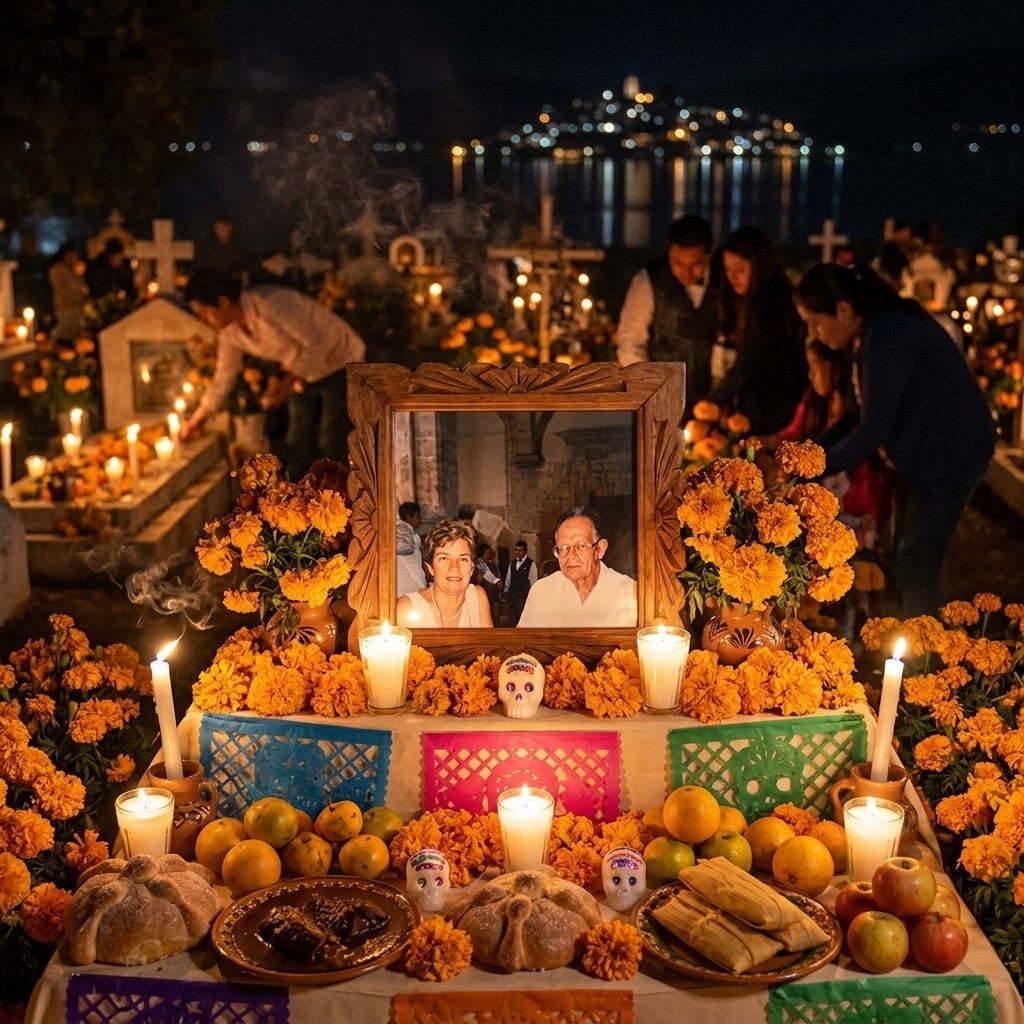
Day of the Death - 2nd of November
he main idea of the Day of the Dead (Día de los Muertos) celebration is to celebrate life by honoring and remembering deceased loved ones.
Rather than being a time of mourning or sadness, it is a joyful family reunion where the boundary between the physical world and the spirit world is believed to dissolve. Families invite the souls of their ancestors to return for a brief visit by creating beautiful altars (ofrendas) filled with their photos, bright orange marigold flowers, traditional foods like pan de muerto, and their favorite drinks. Ultimately, it is a celebration rooted in the belief that the dead should be remembered with happiness, love, and storytelling, keeping their memory alive forever.
This year, Mexican Physio is dedicating "La Ofrenda" to Francisco Ramos (1937 -2019) and Aurora Ramos (1943-2026) - My father and my Aunty.
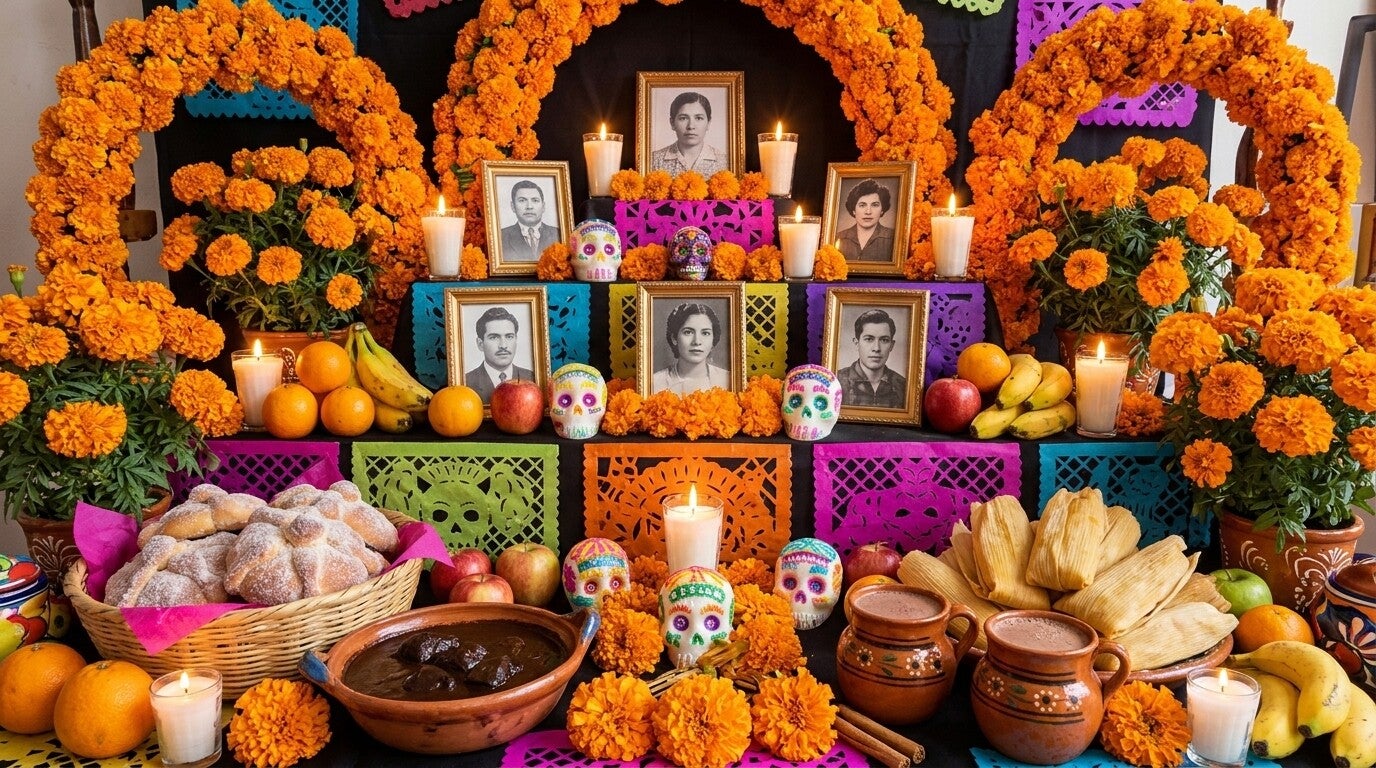
What does the food represents in the altar?
The main explanation for placing food on the Day of the Dead altar (ofrenda) is to welcome, nourish, and comfort the souls of deceased loved ones after their long journey from the spiritual world back to the physical world.
It is a deeply symbolic gesture of hospitality and love, rooted in several key concepts:
🍲 1. Nourishment for the Spiritual Journey
The journey between the afterlife and the living world is believed to be long and exhausting. The food is placed on the altar so that the spirits can consume its essence and aroma to replenish their energy. While the spirits cannot physically eat the food, they absorb its nutritional and spiritual spirit.
🌮 2. Personal Connection and Remembrance
Families do not just place any random food on the altar; they prepare the exact favorite meals and drinks of the deceased (such as mole, tamales, or specific traditional dishes). This serves as a deeply personal way to say, "We remember who you were, what you loved, and you are still a part of our family."
🍞 3. The Symbolism of "Pan de Muerto"
The traditional Pan de Muerto (Bread of the Dead) is a crucial, dedicated component of the altar:
- The Shape: The round loaf represents the circle of life and death.
- The Bones: The cross-like dough shapes baked on top represent the bones of the deceased and the four cardinal directions.
- The Tears: The small circular ball on the very top symbolizes a teardrop or the skull of the departed.
🥛 4. Water and Salt for Purification
Alongside the cooked meals, water and salt are always present:
- Water: A glass of water is vital to quench the souls' thirst after their arduous travel.
- Salt: Salt acts as a purifying element to keep the souls from being corrupted during their transition between worlds.
Once the celebration concludes and the spirits have extracted the spiritual essence of the offerings, the living family members gather to share, eat, and celebrate the physical feast together.
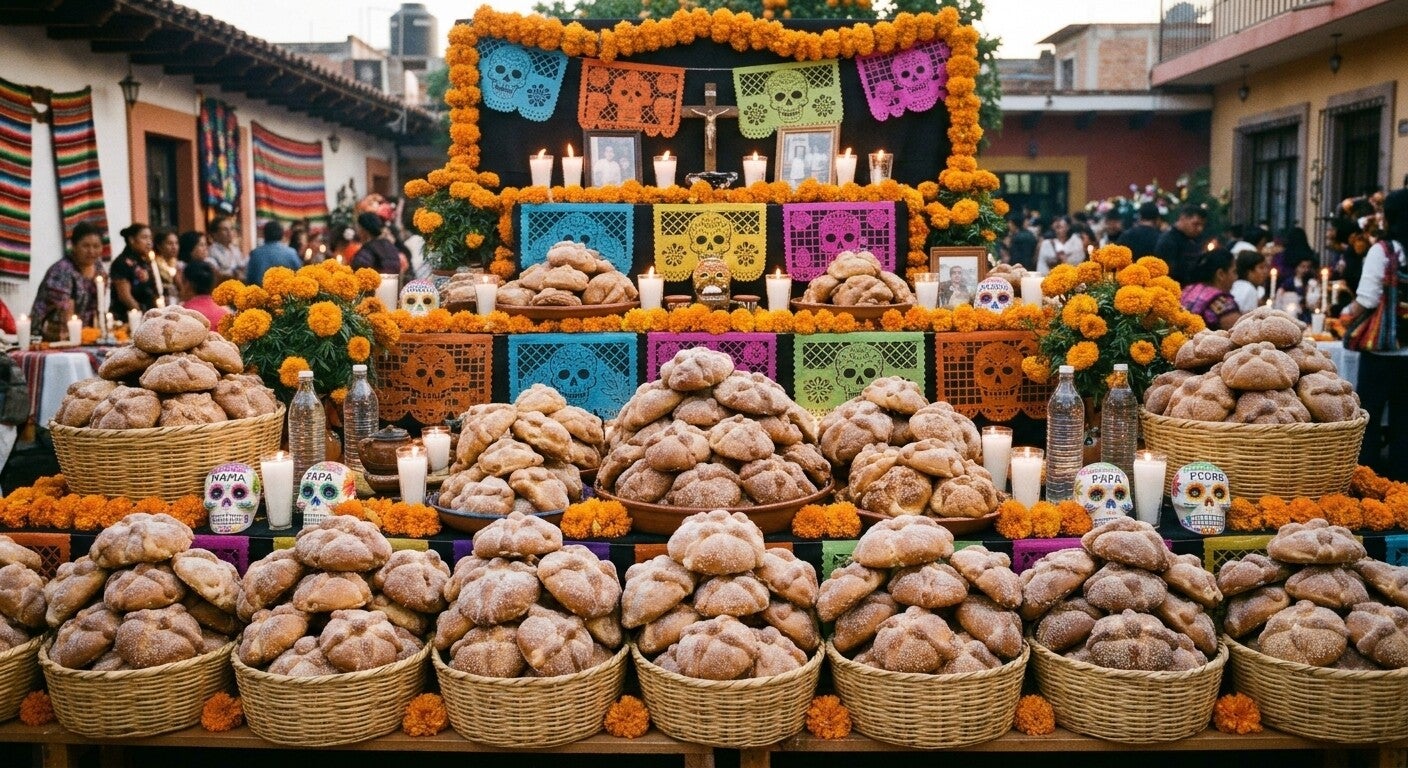
The bread
The traditional Pan de Muerto (Bread of the Dead) represents a holy, edible offering that symbolizes the physical body of the deceased, the circle of life, and the deep connection between the living and the dead.
Every visual feature baked into this sweet, orange-blossom and anise-scented bread holds profound spiritual meaning:
- The Round Shape: The main circular loaf represents the circle of life and death, signifying that death is not the final end, but a natural phase of existence.
- The Bones (Canillas): The long, finger-like strips of dough crossed over the top of the loaf represent the bones of the deceased. They are arranged in a cross layout, which simultaneously references the four cardinal directions of the universe in Aztec mythology and the Christian cross.
- The Teardrop or Skull (Agüita): The small ball of dough placed at the very center top represents the skull of the departed or the tears shed by living family members for their loved ones.
- The Essence: The distinct use of orange blossom water in the recipe is intentional; its fragrant aroma is believed to help guide the wandering spirits back to the altar.
Ultimately, placing Pan de Muerto on the altar is an act of supreme hospitality, offering a comforting, familiar physical nourishment for the returning souls to enjoy before they depart back to the spiritual world.