

Tuning your brain for better health
Discover Transcranial Direct Current Stimulation (tDCS), a gentle yet powerful approach to enhancing your brain's natural capabilities. Learn how this innovative therapy, combined with our expert care, can help you achieve significant improvements in your health and daily life.
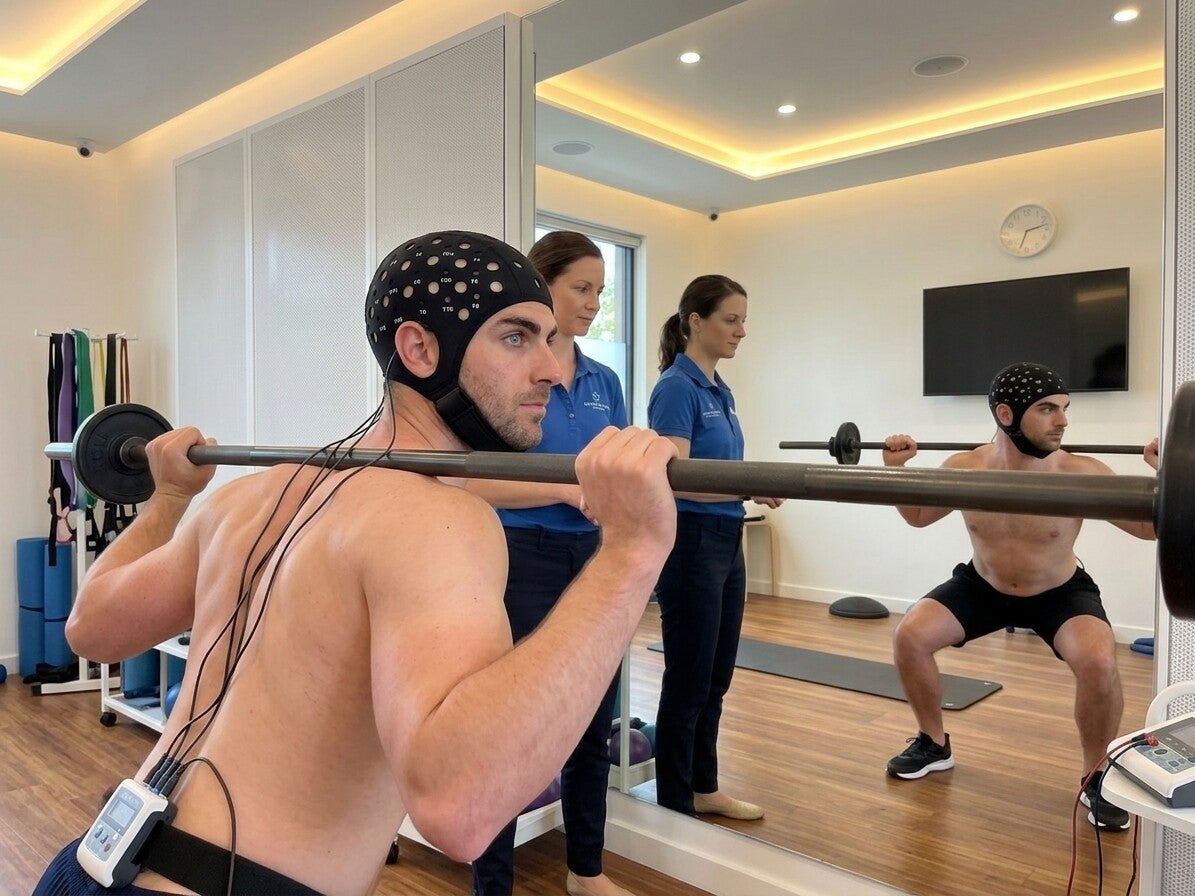
What is tDCS and how does it work?
Transcranial Direct Current Stimulation (tDCS) is a non-invasive, safe, and low-cost technology that uses a very weak electrical current to nudge the brain toward better health or performance. Imagine your brain’s activity as a volume dial: tDCS doesn't force a "song" to play (it doesn't make neurons fire on its own), but it adjusts the volume, making it easier or harder for your brain to send certain signals. This "tuning" can help people struggling with chronic pain, those recovering from a stroke, or even those looking to perform a physical task more efficiently.
The device uses two or more small pads (electrodes) placed on the scalp to deliver a constant current, usually between 0.5 and 2.0 milliamps—which is about the amount of energy needed to power a small LED light.
- Anodal Stimulation (the "volume up" pad): This typically makes the brain cells under the pad more "excited" and likely to fire, which is helpful for "waking up" areas that are underactive, such as the motor cortex after a stroke.
- Cathodal Stimulation (the "volume down" pad): This usually quiets down brain cells, which can be useful for calming overactive regions, such as those causing seizures in epilepsy.
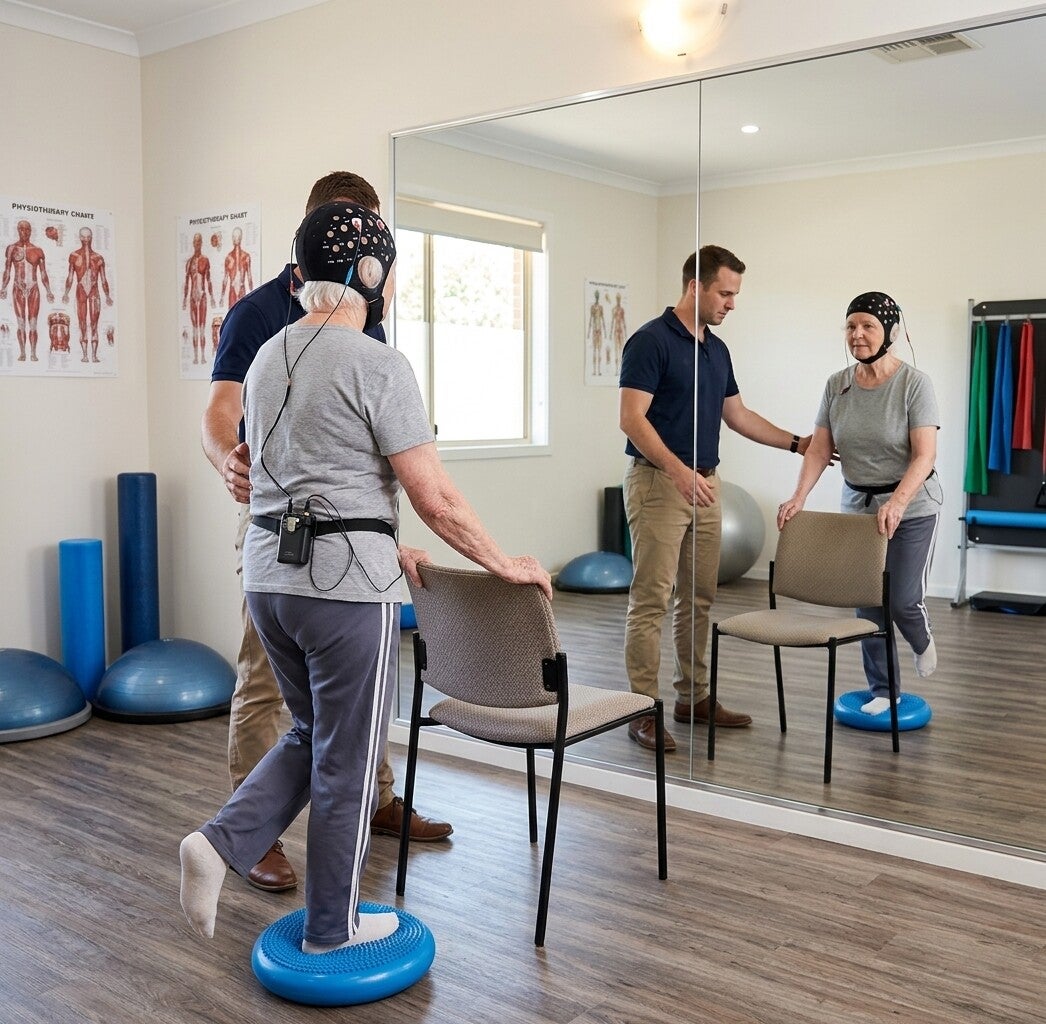
Is tDCS right for you?
tDCS can be a beneficial therapy for a range of conditions. Ideal patients often experience issues such as:
- Chronic pain and fibromyalgia: In conditions like fibromyalgia, the brain often becomes "stuck" in a state of central sensitisation, where it overreacts to normal touch or pressure as if it were painful. tDCS helps by adjusting the balance of neurotransmitters. It can decrease excitatory chemicals.
- Post-stroke recovery: tDCS can assist in "waking up" underactive brain regions, aiding motor recovery.
- Enhancing physical performance: For those looking to improve efficiency in physical tasks.
If you are struggling with chronic pain, recovering from a neurological event, or seeking to optimise your motor functions, tDCS at Mexican Physio could offer a path to improvement.

Why choose Mexican Physio for tDCS?
At Mexican Physio in London, United Kingdom, we believe in integrated care. Our unique approach to tDCS involves combining it with other proven therapeutic strategies to maximise your results.
- Improved functional capacity and physical performance: A pilot study found that combining anodal tDCS over the primary motor cortex (M1) with a realistic domestic task (such as hanging washcloths) led to a 49% increase in repetitions achieved. A critical benefit observed in this approach was that physical performance increased significantly without a corresponding increase in pain or fatigue, despite the mobilisation of typically painful body parts. This suggests tDCS can help patients bypass the "fear of movement" (kinesiophobia) common in chronic pain conditions.
- Synergistic analgesic effects: Combining home-based anodal tDCS over the dorsolateral prefrontal cortex (DLPFC) with exercise and pain neuroscience education (PNE) significantly outperformed sham treatments. This combination resulted in clinically relevant reductions in pain severity and improved pain relief.
The primary rationale for combined therapy is that tDCS can restore basic cortical metabolism (reversing "hypometabolism") and adjust neurotransmitter levels (like GABA and Glutamate), making the brain more receptive to the functional changes intended by a physical therapy like Vojta. However, the anatomical target of the tDCS must be carefully aligned with the goals of the combined therapy to avoid one method cancelling out the other, a principle we rigorously follow.
What can you expect from tDCS therapy?
After a course of tDCS therapy with Mexican Physio, you can realistically hope to experience significant positive changes in your daily life. Patients often report improvements in:
- Reduced chronic pain levels and improved pain management.
- Enhanced motor function and mobility, especially after stroke.
- Decreased kinesiophobia (fear of movement).
- Better overall functional capacity and ability to perform daily tasks.
- Improved cognitive performance and focus.
Our goal is to help you regain control over your body and mind, enabling you to live a more active and fulfilling life.